July 16, 2026
Synthetic Data Generation: What Physical AI Needs
Synthetic data powers AI training at scale. Learn what it is, how it works, and why physical AI requires a fundamentally different approach to generate it.
Synthetic data powers AI training at scale. Learn what it is, how it works, and why physical AI requires a fundamentally different approach to generate it.
Key takeaways
Synthetic data generation is not a shortcut. For physical AI, it is the only path that scales. The question is not whether to use it. It is whether the process generating it is accurate enough to produce data a robot can actually learn from.
Physicl is built to answer that question. Physics-tagged 3D assets and simulation-ready environments, for robotics simulation and foundation model training, at the scale these systems actually need.
Request access to the Private Beta
Synthetic data is artificially generated data used to train AI models instead of, or alongside, real-world collected data.
Real data is expensive, slow to label, and constrained by privacy, safety, and access. Synthetic data removes those constraints. You generate what you need, at the scale you need, with annotations already attached.
It comes in two forms.
Statistical synthetic data learns the patterns of a real dataset and produces new samples that preserve those relationships without exposing the original records. Common in healthcare, finance, and anywhere privacy obligations apply.
Simulation-based synthetic data comes from virtual environments: camera feeds, depth maps, sensor readings, ground truth labels, all generated from physics engines and 3D assets rather than real-world observation. This is the form that matters for physical AI.
The end-to-end process of producing artificial training data: defining what is needed, building the system that creates it, and validating that the output actually works for training.
In simulation-based pipelines, it works in five stages:
The advantage over real-world collection is control. You generate rare scenarios and edge cases that would take months to capture in the real world, with every frame already labeled.
Real data is never enough. That is why synthetic data has become standard across machine learning:
In each case, the quality bar is simple: does the synthetic data preserve the statistical or semantic properties of real data well enough to improve model performance? The field has largely solved that.
Physical AI breaks that model entirely.
A language model trained on bad text produces bad sentences. A robot trained on bad physics data falls over, drops objects, or crashes into walls the moment it leaves the simulator.
A robot learns from physical interactions: how objects resist force, how surfaces create friction, how weight affects movement. Get those properties wrong and the robot learns wrong behaviors. Wrong behaviors in physical AI do not produce bad outputs. They produce failed deployments.
The quality ceiling is set entirely by the realism of the simulation pipeline. Most teams discover this the same way: source from generic 3D libraries, run the pipeline, watch the robot fail on contact with real objects. The problem is not the model. It is the data.
Physical AI is model-ready and data-limited. Synthetic data closes that gap, but only when the simulation pipeline is accurate enough.
Four things generic pipelines consistently fail to provide:
Physicl is the data infrastructure layer for physical AI. It takes any source material and converts it into physics-accurate, simulation-ready 3D assets and environments, at the scale robotics and foundation model pipelines actually need:
Any input accepted: images, video, scans, engineering files, telemetry. No pre-processing required.
Raw inputs are converted into structured, physics-tagged 3D. Geometry cleaned. Materials resolved. Friction, mass, and collision properties derived automatically from the object's actual geometry and material composition, not estimated.
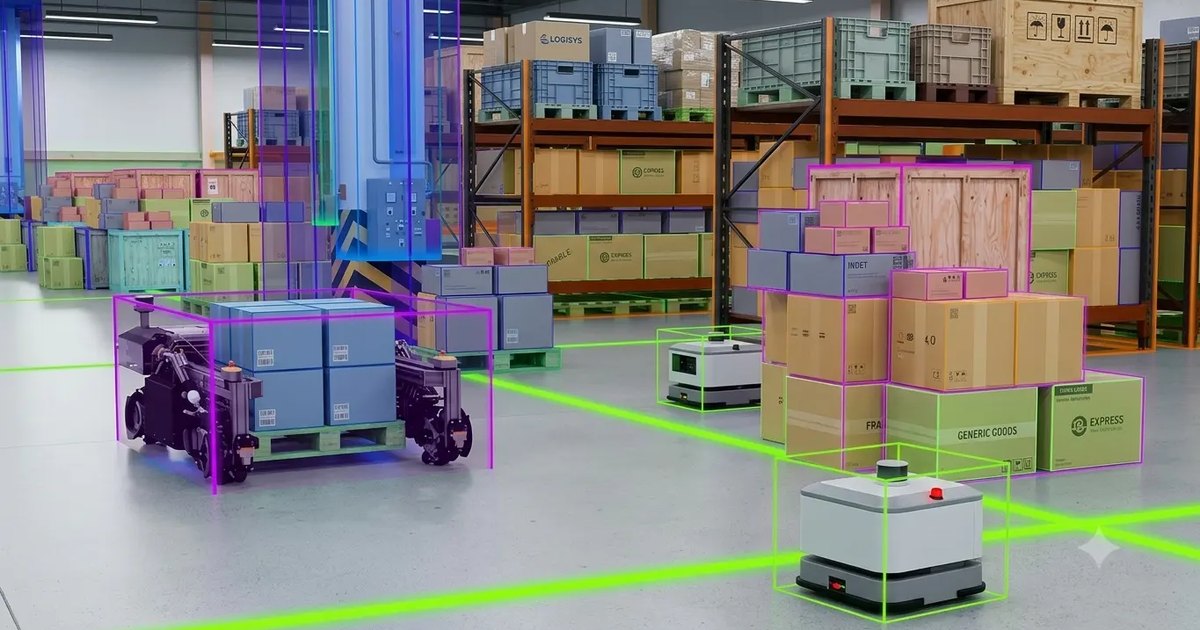
Parametric scene generation then produces infinite permutations from that base. Different lighting, object placements, scales, occlusion patterns. The same warehouse or kitchen rendered thousands of ways, covering every scenario a training pipeline needs, without building each one by hand.
Every asset passes through 3D specialists and physics reviewers across three rounds of expert validation. 98% pass rate before anything ships.
Output exports directly in USD, URDF, or render format into Isaac Sim, MuJoCo, Unreal, or Omniverse. No conversion, no cleanup pipeline between the data and the training loop.
The result is synthetic training data a robot or foundation model can actually learn from. Not an approximation. Data that behaves the way the real world behaves.
Physicl's library is live and growing, with a roadmap to 1,000,000 sim-ready assets by 2027. All content is commercially licensed for AI training use.

