June 16, 2026
Embodied AI in 2026: The Race to Teach AI How to Interact with the Physical World
Explore embodied AI in 2026, from simulation training environments and robotics data challenges to real-world applications in autonomous systems.
Explore embodied AI in 2026, from simulation training environments and robotics data challenges to real-world applications in autonomous systems.
Key takeaways:
For the last four years, the most consequential AI breakthroughs were digital: language models that write, converse, and generate images and video. The result has been a significant shift in how people search and consume information.
But in 2026, a new development is set to change our relationship with AI permanently: embodied AI.
The market signals are clear. Jensen Huang, CEO of NVIDIA, said it first: "The ChatGPT moment for robotics is here." The numbers back him up. The embodied AI sector is projected to grow from $3.8 billion in 2026 to over $7.24 billion by 2030, and robotics companies have already raised $55.8 billion in 2026 alone, nearly double the previous annual record. The race is on.
What was once a niche research domain is now attracting capital, strategic partnerships, and competitive urgency across industries. Key players are already taking positions: NVIDIA is leading hardware and simulation infrastructure through NVIDIA Isaac Lab, while data-layer companies like Physicl are building the training foundations the field needs to scale.
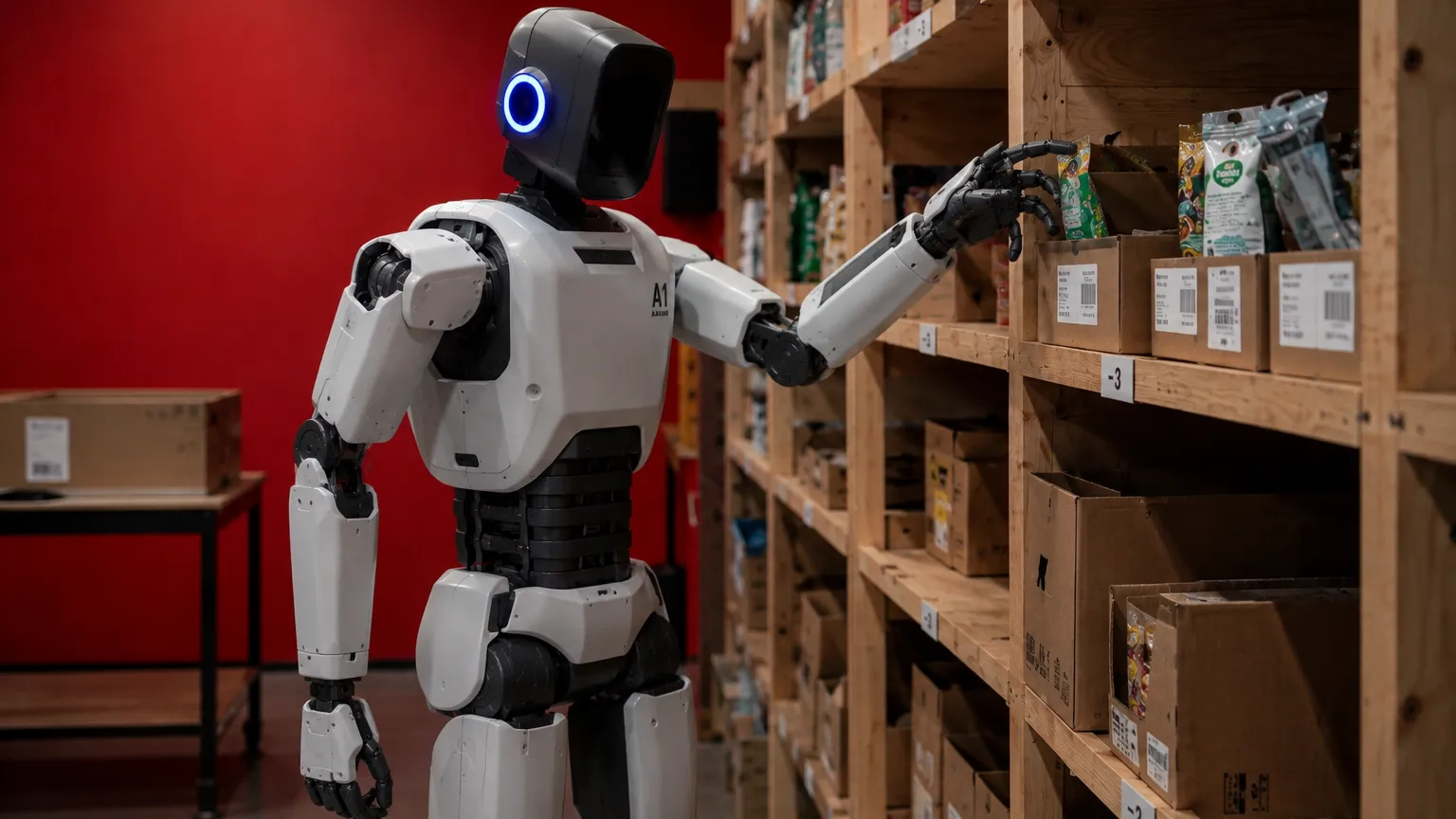
Embodied AI is an AI model integrated into a physical form like a robot, autonomous vehicle, or assistive machine, that can perceive the real world through sensors, reason about what it perceives, and take action in response.
The key word is embodied: the system learns through interaction, not just observation. It develops an understanding of space, cause and effect, and physical consequence by doing things, not by reading about them.
Most AI familiar to the public is informational AI: systems that take text or data as input and return predictions, classifications, or generated content. Their work stays in the digital space.
Embodied AI is different. It navigates real environments, identifies and works around obstacles, and completes tasks with spatial precision.
No. Large language models like ChatGPT hold vast knowledge about the physical world but do not understand it. They can describe the properties of an object; they cannot grasp one.
Embodied AI systems require training on spatial and behavioral data: how objects occupy space, how environments change, how actions produce physical consequences. Even a robot that uses a language model to interpret instructions needs a separate model to understand and act in the physical world.
A fully capable embodied AI system is defined by three characteristics:
Getting all three right, simultaneously, in a dynamic environment is the core challenge.
Language models thrive on internet data because text and images exist in unlimited quantities online. Embodied AI cannot follow the same path.
The internet records what things look like, not how they behave. A robot cannot learn to grasp an object by looking at photos of it. It needs to know how objects respond when touched, moved, or dropped, and what happens when things go wrong.
Collecting this in the real world is expensive, slow, and impossible to scale.
Simulation is the dominant approach in 2026, and the quality of data going into it determines everything.
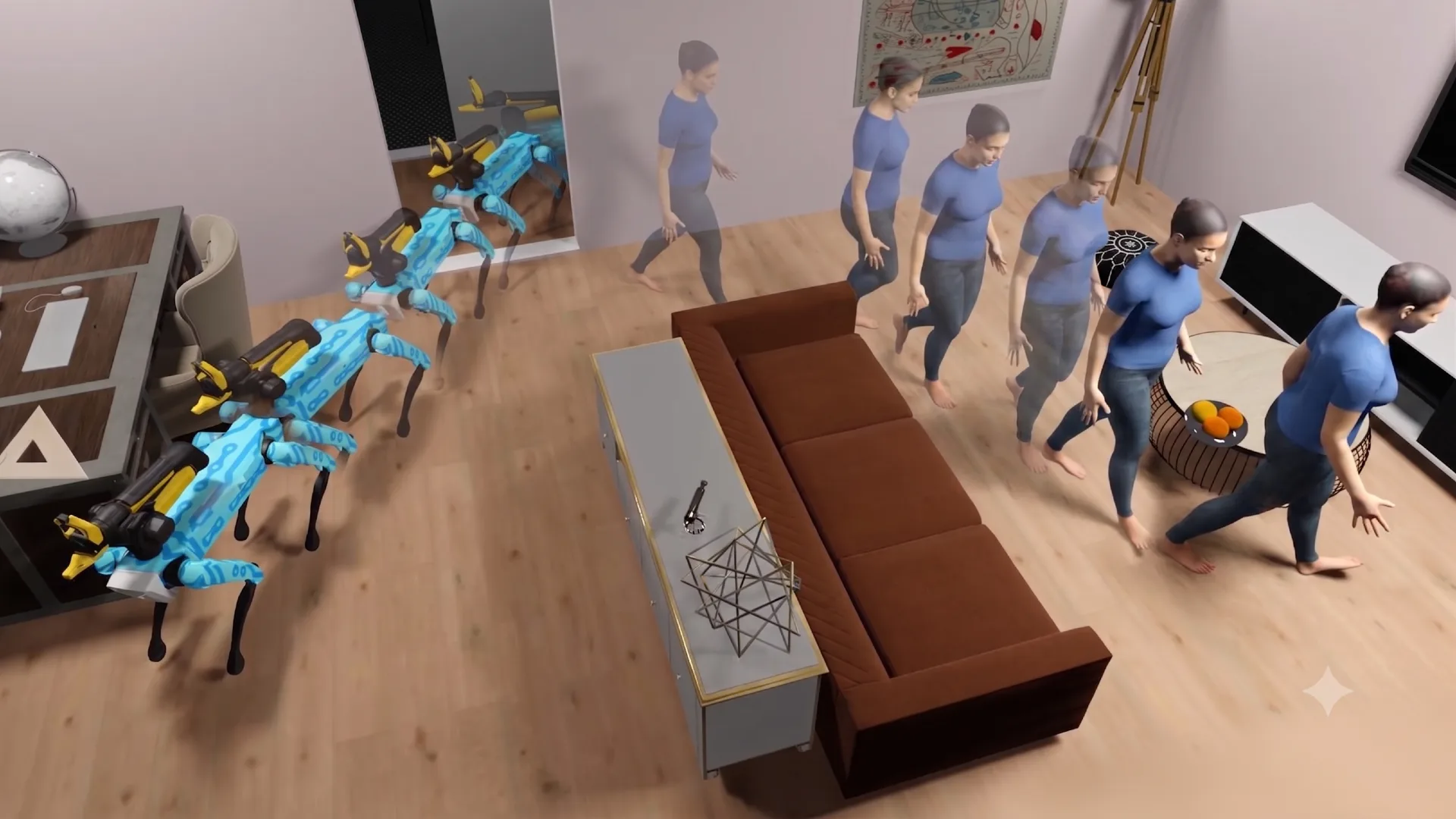
The process is simple to understand: an AI model gets into a virtual environment, filled with physically accurate 3D objects, and experiments with them, gaining knowledge and experience. Then, when embodied, it knows how the real world behaves.
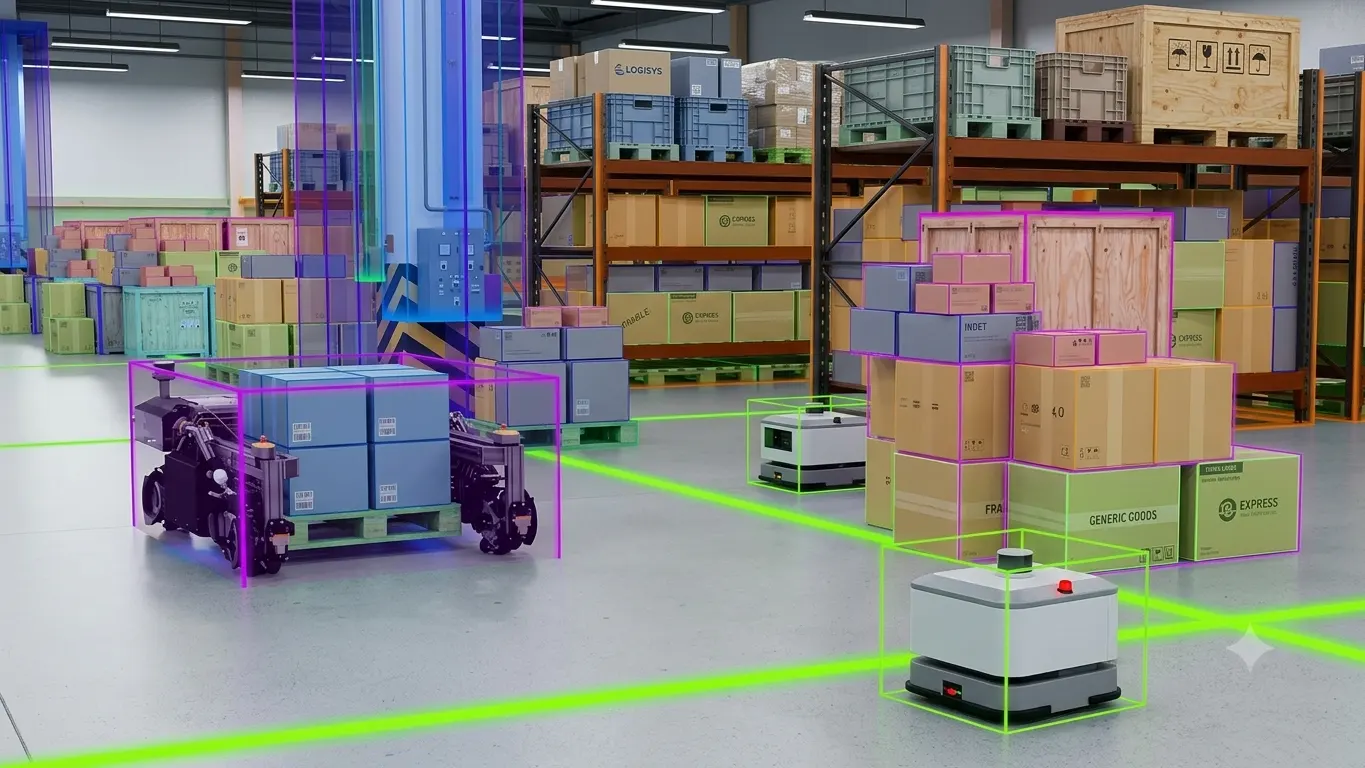
And how is this virtual training ground built? The pipeline is as follows:
Companies like Physicl have built end-to-end pipelines for exactly this. Better data going in means smarter, safer, and more generalizable robots coming out.
Not all simulation environments are equal. The quality of the environment directly determines the quality of the robot coming out of it. Four things matter:
Consider a robot designed to pick strawberries in a field. The soil, the plants, and the fruit all need physics-accurate replicas in the digital twin. But that is not enough: the robot also needs to handle variations it will encounter in the real world, strawberries covered in frost, plants bent by wind, and uneven terrain. Every plausible scenario needs to be represented. The broader and more accurate the asset library, the more capable and generalizable the resulting robot.
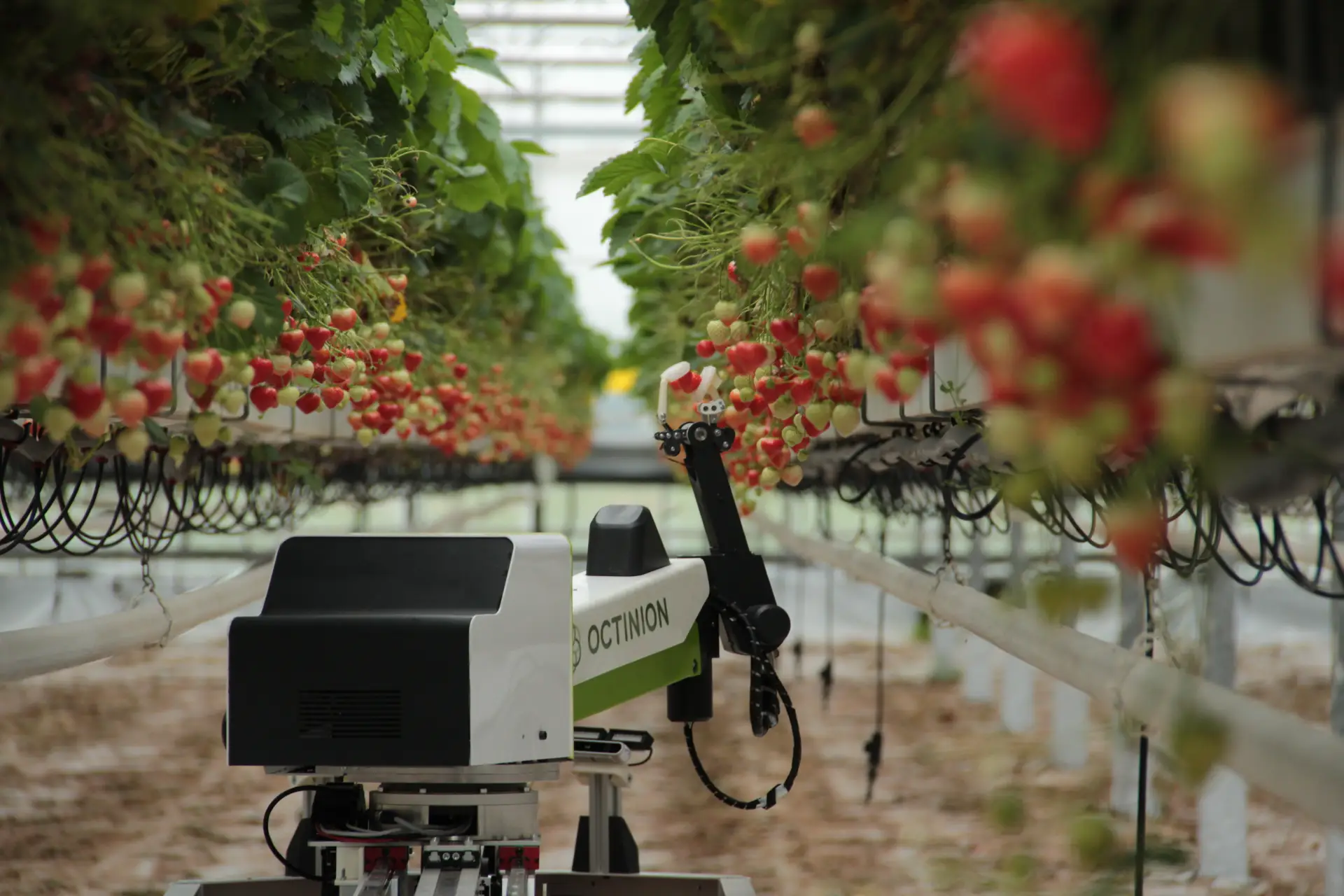
Even well-trained robots face a fundamental challenge: the real world is messier than any training environment. A model can perform flawlessly in controlled conditions and still struggle when it encounters something it was not fully prepared for. This is precisely why the quality of simulation assets matters so much.
When the 3D objects a robot trains on accurately replicate how things look, feel, and behave in reality, that gap narrows significantly. Without that data layer, training AI models at scale would be far more expensive, slower, and dependent on physical hardware that most organizations cannot access.
Generalization remains an open challenge too. Handling truly novel situations, environments and objects never seen during training, reliably is still unsolved across the industry.
Safety and reliability add another layer of complexity. Embodied AI failures have physical consequences, and the SAE J3329 safety standard for embodied AI highlights that current models still fall short of the control speed required for precision tasks. The path from research prototype to production deployment is longer and more demanding than it is for software alone.
Physicl is onboarding a select group of robotics teams to its private beta: physics-accurate, human-validated 3D assets and environments, ready to plug into your training pipeline from day one.